
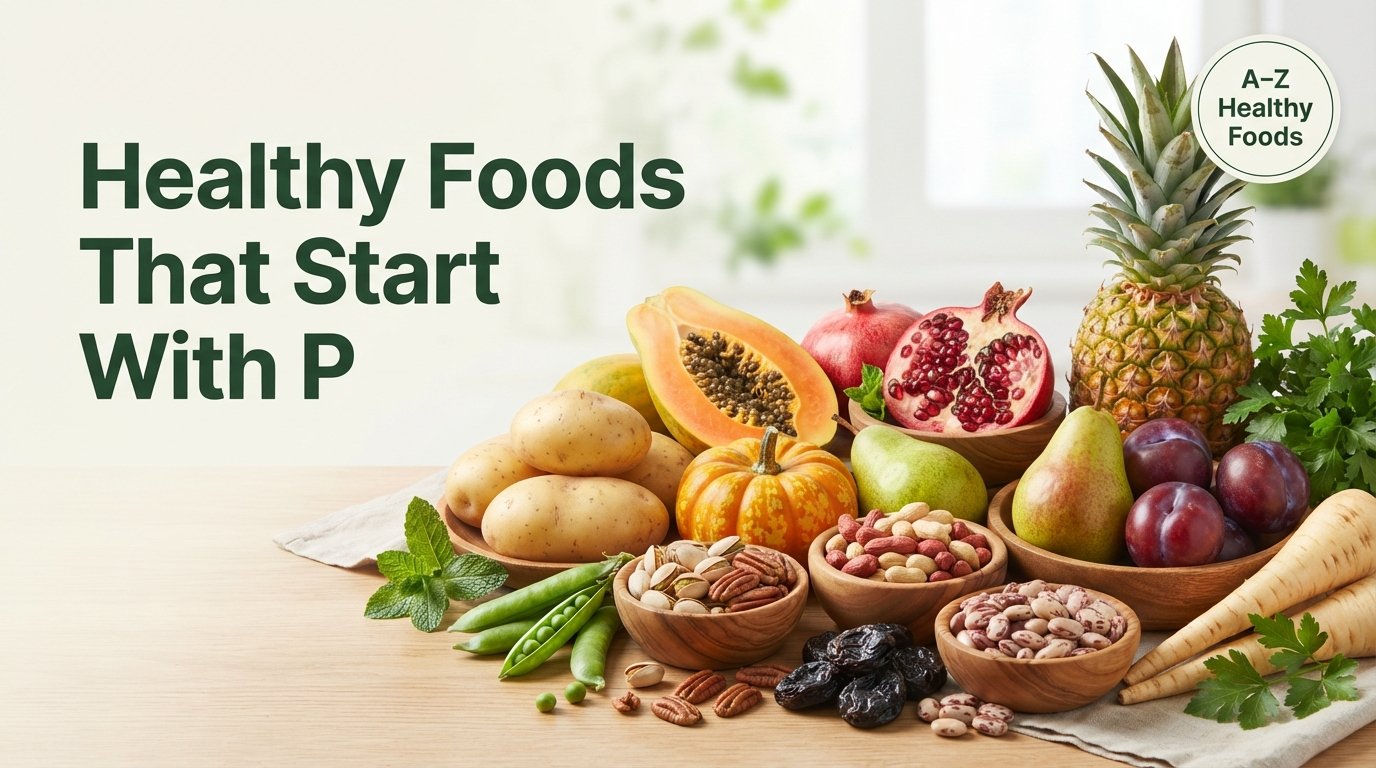
Healthy Foods That Start With P 40+
If you’ve ever tried to eat healthier by exploring foods letter by letter, you’ve probably noticed that healthy foods that start with P are everywhere once you start looking. From tropical fruits like papaya and pineapple to nutrient-packed vegetables like pumpkin and parsnip, the letter P covers an impressive range of whole, minimally processed foods worth adding to your plate.
This guide focuses only on genuinely healthy foods that start with P — not the pizza, pretzels, and potato chips that usually crowd generic “P foods” lists. You’ll find a categorized breakdown of fruits, vegetables, legumes, nuts and seeds, and whole grains, along with real nutrition information, practical health benefits, and simple ways to work each one into your meals.
By the end, you’ll have a clear, science-backed reference for healthy foods that start with P — one you can actually use for meal planning, grocery shopping, or teaching kids about nutritious eating.
What Makes a Food “Healthy”? (Quick Primer)
Before diving into the list, it helps to define the term. A food is generally considered healthy when it’s nutrient-dense — meaning it delivers a meaningful amount of vitamins, minerals, fiber, or protein relative to its calorie content — and when it’s minimally processed, retaining its natural fiber, vitamins, and antioxidants.
Nutrient Density vs. Calorie Density
Nutrient-dense foods, like pumpkin or papaya, pack a lot of vitamins and fiber into relatively few calories. Calorie-dense foods with little nutritional payoff — think potato chips or pastries — offer the opposite trade-off. That distinction is exactly why this list separates genuinely healthy P-foods from the processed snacks that share the same starting letter.
Whole vs. Processed Foods
Whole foods like fresh pears, peas, and pistachios are eaten close to their natural state. Processed foods that start with P, like pretzels or Pringles, typically involve refined flour, added sugar, or excess sodium. Both types of foods can technically be called “P foods,” but only one type belongs on a healthy eating list.
Healthy Fruits That Start With P
Fruits are where the letter P truly shines. These options are naturally sweet, fiber-rich, and loaded with vitamins.
Papaya
Description: A tropical fruit with soft, orange flesh and black, edible seeds.
Nutrition highlights: Papaya is especially rich in vitamin C and beta-carotene, along with a meaningful dose of fiber.
Health benefits: According to Cleveland Clinic, papaya may help protect vision, fight inflammation, support gut health, and help manage blood sugar, thanks to its antioxidant and nutrient content.
Taste: Sweet and slightly musky, with a texture similar to cantaloupe.
Uses: Eaten fresh, blended into smoothies, or added to fruit salads and salsas.
Storage tips: Ripen at room temperature until the skin gives slightly, then refrigerate and use within a few days.
Pineapple
Description: A spiky-skinned tropical fruit with juicy, fibrous yellow flesh.
Nutrition highlights: Pineapple is a strong source of vitamin C and contains bromelain, a natural enzyme.
Health benefits: Its vitamin C content supports immune function, and its fiber content supports digestion.
Taste: Sweet with a tangy, slightly acidic edge.
Uses: Fresh, grilled, blended into smoothies, or added to savory dishes for contrast.
Storage tips: Store whole pineapple at room temperature until ripe, then refrigerate cut pieces in an airtight container for up to five days.
Pomegranate
Description: A round, red fruit filled with juicy seed clusters called arils.
Nutrition highlights: A half-cup serving of pomegranate seeds contains roughly 72 calories, 1.5 grams of protein, and 3.5 grams of fiber, according to nutrition data cited by registered dietitians.
Health benefits: Pomegranates are often described as a “superfood” for their high antioxidant and anti-inflammatory phytochemical content, which experts link to heart and gut health benefits.
Taste: Sweet-tart with a satisfying crunch from the seeds.
Uses: Eaten by the spoonful, sprinkled on salads and yogurt, or juiced.
Storage tips: Whole pomegranates keep for weeks in the fridge; removed arils should be refrigerated and used within about five days.
Pear
Description: A bell-shaped fruit with tender, juicy flesh and edible skin.
Nutrition highlights: Pears are an excellent source of dietary fiber, especially when eaten with the skin, plus vitamin C and smaller amounts of vitamin K.
Health benefits: The fiber in pears supports digestion and helps promote fullness, while vitamin C supports immune function.
Taste: Mildly sweet with floral, sometimes spiced undertones depending on the variety.
Uses: Eaten fresh, baked, added to salads, or paired with cheese and nuts.
Storage tips: Ripen at room temperature; refrigerate once ripe to extend freshness by several days.
Peach
Description: A round, fuzzy-skinned stone fruit with juicy, sweet flesh.
Nutrition highlights: Peaches provide vitamin C and vitamin A, along with a modest amount of fiber.
Health benefits: The vitamin C and antioxidants in peaches support skin health and immune function.
Taste: Sweet, juicy, and fragrant.
Uses: Fresh, grilled, baked into desserts, or blended into smoothies.
Storage tips: Ripen at room temperature in a paper bag, then refrigerate once soft.
Plum
Description: A smooth-skinned stone fruit available in red, purple, or yellow varieties.
Nutrition highlights: A typical plum contains around 30 calories and just under 1 gram of fiber, along with vitamin C, vitamin K, and potassium.
Health benefits: Per Cleveland Clinic, plums are rich in antioxidants, particularly anthocyanins in darker varieties, and research suggests they may support heart health, healthy digestion, and bone strength.
Taste: Sweet-tart, juicy, with a slightly tangy skin.
Uses: Eaten fresh, stewed, or baked into desserts.
Storage tips: Ripen at room temperature; refrigerate ripe plums and use within about a week.
Prunes (Dried Plums)
Description: Plums that have been dried, concentrating their natural sugars and nutrients.
Nutrition highlights: Prunes are a notable source of fiber, vitamin K, and potassium.
Health benefits: A frequently cited study on postmenopausal women found that regular prune consumption was associated with lower rates of bone loss and improved bone health, and prunes are also well known for supporting digestive regularity.
Taste: Rich, sweet, and chewy.
Uses: Eaten as a snack, chopped into baked goods, or stewed into compotes.
Storage tips: Store in a sealed container in a cool, dry place, or refrigerate for longer shelf life.
Persimmon
Description: An orange, plum-shaped fruit that’s sweet when fully ripe.
Nutrition highlights: Persimmons provide fiber, vitamin A, and vitamin C.
Health benefits: Their antioxidant and fiber content supports digestive and immune health.
Taste: Very sweet and slightly spiced when ripe; astringent if eaten underripe (depending on variety).
Uses: Eaten fresh, sliced into salads, or baked into breads and puddings.
Storage tips: Ripen at room temperature until soft; refrigerate once ripe.
Passion Fruit
Description: A small, wrinkled-skinned fruit with a juicy, seed-filled interior.
Nutrition highlights: Passion fruit is a good source of fiber and vitamin C.
Health benefits: Its fiber content supports digestive health, while vitamin C supports immune function.
Taste: Tart, tropical, and aromatic.
Uses: Scooped and eaten fresh, added to juices, or used in desserts and sauces.
Storage tips: Ripens at room temperature; wrinkled skin indicates peak ripeness. Refrigerate once ripe.
Healthy Vegetables That Start With P
Vegetables starting with P range from cozy fall staples to versatile root vegetables and leafy greens.
Pumpkin
Description: A large, round winter squash, most often orange in color.
Nutrition highlights: According to Mayo Clinic Health System, one-half cup of canned, 100% pumpkin provides about 4 grams of fiber, virtually no fat, and only around 40 calories.
Health benefits: Cleveland Clinic dietitian Julia Zumpano notes that pumpkin is high in fiber, which supports blood sugar management, satiety, and gut health, and its beta-carotene content converts to vitamin A, which supports eye and immune health. Its potassium content is also linked to healthy blood pressure.
Taste: Mildly sweet and earthy, especially when roasted.
Uses: Roasted, pureed into soups, baked into savory or sweet dishes, or blended into smoothies.
Storage tips: Whole pumpkins keep for weeks in a cool, dry place; canned or cooked pumpkin should be refrigerated and used within about a week.
Parsnip
Description: A cream-colored root vegetable closely related to the carrot, with a slightly sweet flavor.
Nutrition highlights: Parsnips provide fiber, vitamin C, and folate.
Health benefits: Their fiber content supports digestive health, and their antioxidant content contributes to overall diet quality.
Taste: Sweet and nutty, especially when roasted, with a texture similar to carrots.
Uses: Roasted, mashed, added to soups and stews.
Storage tips: Store in the refrigerator crisper drawer; keeps for several weeks.
Peas
Description: Small, round green legumes, often eaten as a vegetable.
Nutrition highlights: Peas provide plant-based protein, fiber, vitamin C, and vitamin K.
Health benefits: Their combination of fiber and protein supports satiety and blood sugar management.
Taste: Sweet and slightly grassy.
Uses: Added to soups, stir-fries, salads, and side dishes.
Storage tips: Fresh peas should be refrigerated and used quickly; frozen peas retain nutrients well and last for months.
Potatoes
Description: Starchy root vegetables available in many varieties, from russet to Yukon gold to purple.
Nutrition highlights: Potatoes provide potassium, vitamin C, and fiber, especially when the skin is left on.
Health benefits: Potatoes can absolutely be part of a healthy diet — the key is preparation. Boiling, steaming, or roasting preserves more of their natural nutritional value, while deep-frying significantly increases calorie and fat content.
Taste: Mild and starchy, adaptable to countless flavor pairings.
Uses: Baked, roasted, mashed, or added to soups and stews.
Storage tips: Store in a cool, dark, well-ventilated place; avoid refrigeration, which can alter texture and flavor.
Purple Sweet Potato
Description: A vibrant purple-fleshed variety of sweet potato.
Nutrition highlights: Like other sweet potatoes, purple sweet potatoes are a good source of fiber and vitamin A, along with anthocyanin antioxidants that give them their color.
Health benefits: Their fiber and antioxidant content support digestive health and help protect cells from oxidative stress.
Taste: Sweet and creamy when cooked, similar to orange sweet potatoes.
Uses: Roasted, mashed, or used in place of orange sweet potatoes in any recipe.
Storage tips: Store in a cool, dry place; avoid refrigeration.
Bell Peppers
Description: Sweet, crunchy peppers available in green, red, yellow, and orange varieties.
Nutrition highlights: Bell peppers are an excellent source of vitamin C, often providing more per serving than citrus fruits, along with vitamin A and fiber.
Health benefits: Their vitamin C content supports immune function and skin health.
Taste: Sweet and crisp, with red and yellow varieties being sweeter than green.
Uses: Eaten raw, added to salads, roasted, or stuffed.
Storage tips: Refrigerate in the crisper drawer; use within one to two weeks.
Purslane
Description: A leafy green vegetable with a fresh, slightly tangy, lemony flavor.
Nutrition highlights: Purslane provides fiber, vitamin C, and vitamin A, along with plant-based omega-3 fatty acids.
Health benefits: Its combination of antioxidants and healthy fats makes it a nutrient-dense addition to salads and cooked dishes.
Taste: Fresh, slightly salty and sour, with a crisp texture.
Uses: Added raw to salads or lightly sautéed like spinach.
Storage tips: Refrigerate and use within a few days, as it wilts quickly.
Healthy Legumes, Nuts & Seeds That Start With P
Pistachios
Description: Small, green-tinged seeds from the pistachio tree, often mistaken for nuts.
Nutrition highlights: A one-ounce serving (about 49 kernels) provides notable amounts of protein, fiber, potassium, and vitamin B6.
Health benefits: According to Cleveland Clinic dietitian Julia Zumpano, regularly eating nuts and seeds like pistachios is associated with a lower risk of death from heart disease and other chronic conditions, and pistachios in particular may support gut health, cholesterol levels, and weight management.
Taste: Slightly sweet and earthy.
Uses: Eaten as a snack, added to salads, or used in baking.
Storage tips: Store in an airtight container in a cool place; refrigerate or freeze for longer freshness.
Pumpkin Seeds
Description: Flat, green seeds harvested from pumpkins, also called pepitas.
Nutrition highlights: Pumpkin seeds are a good source of plant-based protein, fiber, magnesium, and zinc.
Health benefits: Cleveland Clinic dietitian Beth Czerwony notes that pumpkin seeds’ protein and antioxidant content can help protect against certain diseases, and even lightly salted varieties tend to be lower in sodium than many other salted snacks.
Taste: Nutty and slightly crunchy, especially when roasted.
Uses: Snacked on plain, added to salads, oatmeal, or granola.
Storage tips: Store in an airtight container; refrigerate for extended freshness.
Peanuts
Description: Technically a legume, peanuts grow underground and are widely eaten as a nut.
Nutrition highlights: Peanuts are a good source of plant-based protein, fiber, and healthy unsaturated fats.
Health benefits: Their protein and fiber combination supports satiety, and their unsaturated fat content is associated with heart health when eaten in place of less healthy fats.
Taste: Rich, nutty, and slightly sweet.
Uses: Eaten whole, as peanut butter, or added to savory dishes and sauces.
Storage tips: Store in a cool, dry place; refrigerate peanut butter after opening if it doesn’t contain preservatives.
Healthy Whole Grains That Start With P
Popcorn (Air-Popped)
Description: A whole grain snack made from popped corn kernels.
Nutrition highlights: Air-popped popcorn is naturally high in fiber and low in calories when prepared without excess butter or salt.
Health benefits: As a whole grain, popcorn provides fiber that supports digestive health, making it a smarter snack option than many processed chips when prepared simply.
Taste: Light, crunchy, and mildly nutty.
Uses: Snacked on plain or lightly seasoned with herbs and spices instead of butter.
Storage tips: Store popped popcorn in an airtight container to maintain crispness.
Pearl Barley
Description: A chewy, mild-flavored whole grain (though pearled barley has had some of the bran removed, it retains much of its fiber).
Nutrition highlights: Barley is a good source of fiber, particularly beta-glucan, along with several B vitamins.
Health benefits: The fiber in barley supports digestive health and satiety.
Taste: Nutty and chewy.
Uses: Added to soups, stews, and grain salads.
Storage tips: Store in a sealed container in a cool, dry pantry.
Whole Wheat Pasta
Description: Pasta made from whole wheat flour rather than refined white flour.
Nutrition highlights: Whole wheat pasta retains more fiber and nutrients than refined pasta varieties.
Health benefits: The added fiber supports digestion and helps slow the rise in blood sugar compared to refined pasta.
Taste: Slightly nutty and heartier than white pasta.
Uses: Used in any traditional pasta dish, paired with vegetables and lean proteins.
Storage tips: Store dry pasta in a sealed container in the pantry.
Nutrition Comparison Table
| Food | Serving | Calories (approx.) | Fiber | Standout Nutrient/Benefit |
|---|---|---|---|---|
| Papaya | 1 cup | ~55 | ~2.5 g | Vitamin C, vitamin A |
| Pumpkin (canned) | 1/2 cup | ~40 | ~4 g | Beta-carotene, low calorie |
| Pomegranate seeds | 1/2 cup | ~72 | ~3.5 g | Antioxidants |
| Pear | 1 medium | ~100 | ~6 g | Dietary fiber |
| Plum | 1 medium | ~30 | ~1 g | Vitamin C, vitamin K |
| Pistachios | 1 oz (49 kernels) | ~160 | ~3 g | Protein, potassium |
| Peas | 1 cup | ~120 | ~7 g | Plant protein, fiber |
| Bell peppers | 1 cup, chopped | ~30 | ~2.5 g | Vitamin C |
Values are approximate and can vary by variety and ripeness. For precise figures, refer to the USDA FoodData Central database.
Health Benefits of Eating More P-Foods
Heart Health
Many P-foods — pistachios, peas, pomegranate, and whole grains — contain fiber, potassium, and antioxidants that support cardiovascular health. Nuts and seeds like pistachios are particularly well studied for their association with healthier cholesterol profiles when eaten in place of less nutritious snacks.
Digestive and Gut Health
Fiber-rich foods like pumpkin, pears, peas, and prunes support regular digestion. Prunes, in particular, are widely recognized for supporting digestive regularity thanks to their fiber and natural sorbitol content.
Immune Support
Vitamin C–rich P-foods like papaya, pineapple, bell peppers, and peaches contribute to normal immune function, while beta-carotene in pumpkin supports the health of skin and mucous membranes, which serve as a first line of immune defense.
Bone Health
Plums and prunes stand out here. Research on postmenopausal women found that regular prune consumption was linked to reduced bone loss, an effect researchers attribute in part to the fruit’s antioxidant and vitamin K content.
Easy Ways to Add Healthy P-Foods to Your Diet
Breakfast Ideas
- Add pumpkin puree to oatmeal or pancake batter
- Top yogurt with pomegranate seeds and a handful of pistachios
- Blend papaya into a morning smoothie
Snack Ideas
- A handful of pistachios or pumpkin seeds
- Sliced pear with nut butter
- Air-popped popcorn with a light dusting of herbs
Dinner and Side Dish Ideas
- Roasted parsnips and purple sweet potatoes as a side
- Peas stirred into grain bowls or pasta
- Bell peppers stuffed with whole grains and legumes
Shopping and Storage Tips
When shopping for healthy foods that start with P, ripeness and preparation matter as much as the food itself.
- Papaya, pineapple, pears, and peaches should give slightly to gentle pressure when ripe; avoid fruit with soft spots or bruising.
- Pumpkin and potatoes keep best in a cool, dry, well-ventilated space rather than the refrigerator.
- Parsnips and bell peppers stay freshest in the refrigerator’s crisper drawer.
- Pistachios and pumpkin seeds last longest in an airtight container, refrigerated or frozen for extended shelf life.
Foods That Start With P to Enjoy in Moderation
Not every P-food belongs on a “healthy” list, and it’s worth being upfront about that. Pizza, pretzels, potato chips, and pastries are all popular foods that start with P, but they typically involve refined flour, added sugar, or excess sodium and are best treated as occasional foods rather than everyday staples. This list intentionally focuses on the whole, nutrient-dense P-foods above, since those are the ones that offer consistent nutritional value.
Frequently Asked Questions
What healthy foods start with P?
Some of the healthiest foods that start with P include papaya, pumpkin, pomegranate, pears, peas, pistachios, peaches, plums, prunes, and bell peppers. These foods are nutrient-dense, minimally processed, and offer meaningful amounts of fiber, vitamins, and antioxidants.
Are potatoes actually healthy?
Yes, potatoes can be part of a healthy diet. They provide potassium, vitamin C, and fiber, especially when the skin is left on. The healthiest preparation methods are boiling, steaming, or roasting, while deep-frying significantly increases the calorie and fat content.
Is pumpkin a fruit or a vegetable?
Botanically, pumpkin is a fruit because it contains seeds, but it’s used and cooked like a vegetable in most savory dishes.
Are prunes good for bone health?
Research on postmenopausal women has linked regular prune consumption to lower rates of bone loss, an effect thought to be related to the fruit’s antioxidant and vitamin K content. More research continues in this area, but current findings are promising.
What’s the healthiest snack that starts with P?
Pistachios, pumpkin seeds, and air-popped popcorn are among the healthiest P-snacks, offering fiber, protein, or healthy fats without the added sugar or sodium found in processed snacks like potato chips or pretzels.
Can kids eat these P-foods safely?
Most of the foods on this list are appropriate for children, though whole nuts and seeds like pistachios and pumpkin seeds can pose a choking hazard for young children and should be given in age-appropriate forms, such as nut butter or finely chopped pieces.
What foods that start with P should I limit?
Pizza, pretzels, potato chips, and pastries are common P-foods that are typically higher in refined carbohydrates, added sugar, or sodium, and are best enjoyed occasionally rather than as everyday staples.
Conclusion
Healthy foods that start with P cover an impressive range — tropical fruits, cozy root vegetables, protein-rich seeds, and fiber-packed whole grains. Whether you’re planning meals, working through an alphabet food challenge, or simply looking to add more variety to your plate, these foods offer real, evidence-backed nutritional value.
Start small: swap potato chips for pistachios, add pumpkin to your next batch of oatmeal, or toss pomegranate seeds onto your lunch salad. If you’re building out your vocabulary around food and nutrition, you might also enjoy exploring powerful words that start with P or skills that start with P for your resume elsewhere on the site.